





Reclaiming Self-Connection with Heidi Allsop, Michelle Keil, and Maria Hendershot
Jan 28, 2026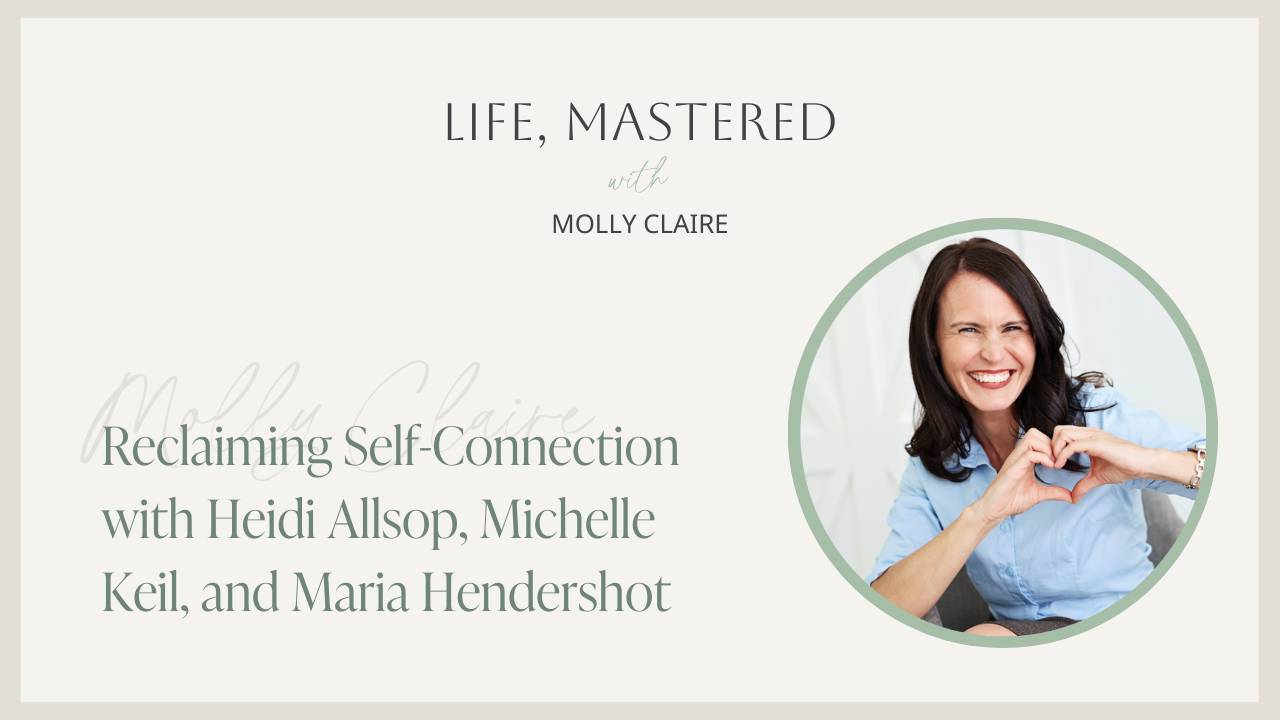
Follow the show:
Apple Podcasts | YouTube Music | Spotify | iHeart Radio | Amazon Music | RSS
We spend so much time focusing on our relationships with other people that it’s easy to forget we matter too. The relationship we have with ourselves is the foundation for every other relationship in our lives, and when that self-connection is strained or neglected, everything else feels harder.
Today, I’m sharing a special rebroadcast from the Raising Boys, Building Men podcast, hosted by Master Coach Heidi Allsop. In this conversation with my fellow She Rises co-authors, Michelle Keil and Maria Hendershot, we discussed how the themes we each write about in the book—wholeness over hustle culture, creativity, nervous system regulation, and joy—directly support moms who want to care for themselves and their kids at the same time.
One of the most important reminders in this conversation is that our kids are always watching. They’re learning what adulthood looks like from how we live. When we show them that life isn’t meant to be lived in a constant state of burnout or perfectionism, we give them a very different template for their own lives and relationships.
Strengthening our relationship with ourselves doesn’t take anything away from the people we love—it actually allows us to better foster those relationships. In this episode, we share practical, doable ways to step out of hustle culture and back into self-connection, without adding another thing to your to-do list. This conversation is about remembering who you are, why your wellbeing matters, and how small shifts can change everything.
What you’ll learn:
- How to start small with self-care when slowing down feels uncomfortable
- How to work with your nervous system and when doing less feels dangerous
- Why joy is a birthright, not a reward for finishing your to-do list
- How simple creative practices can regulate your nervous system and quiet overthinking
- Why modeling rest and boundaries can teach your kids what adulthood looks like
Listen to the episode:
About Heidi Allsop
Heidi Allsop is a Certified Life Coach, Social Worker, and proud Mom of five sons. Known as the Boy Mom Coach, Heidi specializes in empowering moms to strengthen their relationship with their sons, so they can truly enjoy him at every age. With nearly three decades of experience, Heidi understands the challenges of raising boys in today’s world. Her Strong Moms, Strong Sons philosophy has transformed families, helping moms navigate the tumultuous years from middle school to manhood, fostering a lifelong bond with their boys.
Website: heidiallsopcoaching.com
Instagram: instagram.com/heidiallsopcoaching
Facebook: facebook.com/heidiallsopcoaching
The ‘BoyMoms” Blueprint: heidiallsopcoaching.myflodesk.com/boymomblueprint
About Maria Hendershot:
Maria Hendershot is a master certified life coach who helps burned-out moms reclaim energy, joy, and purpose. With a background in life, health, and wellness coaching, she blends mindset, habits, and nervous system work in her 90-Day Joyful Reinvention Program to create lasting change. A longtime homeschooling mom of 20+ years, Maria helps women feel good enough to dream again—and bold enough to live a life they once thought was out of reach. Get more at Joyfulreinvention.com
About Michelle Keil:
Michelle Keil, affectionately known as The Doodle Coach, is a Master Certified Holistic Coach and the creator of a unique coaching method who helps overwhelmed women quiet their inner critic, lighten their emotional load, and reconnect with who they truly are—through the surprisingly powerful tool of doodling. Her playful yet profound approach is faith-centered, science and evidence-informed, and rooted in years of training, including an Advanced Certification in Motherhood and Family Life. She weaves together creativity, faith, and nervous system-aware coaching to support women in finding grace in the margins of their lives.
Michelle’s signature programs include Drawn to Grace, a 5-day guided doodle practice to build self-compassion, and Draw Yourself In, a 12-week coaching experience for women ready to release perfectionism and rediscover their true voice. She also leads The Doodle Lab, a monthly creative space for reflection, connection, and nervous system regulation—no art skills required.
Whether through her courses, community, or one-on-one coaching, Michelle makes it safe, —and even fun—for women to let go of who they think they should be and remember who they already are. Get more at Thedoodlecoach.com
Connect with Molly Claire
Get the book: She Rises: Insights and Wisdom from the Women of The Masterful Coach Collective
Molly’s Website: MollyClaire.Com
Master Coach Training 2026 Application Open
Have a question or thoughts about the podcast? Don’t hesitate to contact Molly at:
Molly’s book: The Happy Mom Mindset: mollyclaire.com/book
Free resources:
Please help Molly reach even more like-minded individuals! Simply post a review of the podcast on your favorite platform (or two). It is so appreciated.
Are you a leader, coach, or business owner who wants to inspire, influence, and cultivate lasting change in yourself or others? Unlock your full potential as a leader and coach with the 4 fundamentals of lasting change coach training program.
Apple Podcasts | YouTube Music | Spotify | iHeart Radio | Amazon Music | RSS
Full Episode Transcript:
Molly Claire 00:39
Hello and welcome to this week's episode of Life, Mastered. Today you are going to hear a special rebroadcast of an interview conducted this last fall on the Raising Boys, Building Men podcast hosted by master coach Heidi Allsop. Heidi's podcast is an incredible resource for moms raising boys in this generation and the unique challenges that they face. Heidi also happens to be one of my own clients. I worked with Heidi and a few different programs prior to this last year and this last year she completed holistic master coach training. So yes, she is master certified, she is trauma-informed, and the work she does is absolutely incredible. As you'll hear in this interview, she interviewed me as well as Michelle and Maria, two of my co-authors in the bestselling book, She Rises. In this conversation, we're talking about the power of self-connection and what that means for us as women and also as women who are raising children. I hope you love this episode and let's go ahead and get started.
Heidi Allsop 01:53
Today, I'm doing something that I've never done before. I've invited three incredible women who are powerful voices, who know what it means to stop hustling, peel back the perfectionism and rediscover the joy in your life. You are going to hear today from Molly Claire, who's been a guest on our show before. She is the founder of the Masterful Coach Collective, where she trains and mentors master level coaches in the four fundamentals of lasting change. We also have Michelle Keil, who is affectionately known as the Doodle Coach. She is a master certified holistic coach and the creator of a unique coaching method that helps overwhelmed women quiet their inner critic. Can we all use a little bit of that? Lighten your emotional load and reconnect with who you truly are through the surprisingly powerful tool of doodling. And last but certainly not least, Maria Hendershot. Maria is a master certified coach who helps burn out moms, reclaim energy, joy and purpose. Why does this matter to you today as you are a mom raising sons? Because your boys are learning what adulthood looks like from the way that you live. And when you show them that life is not about perfectionism or burnout or overwhelm, but it's about wholeness and creativity and joy, you are actually raising men who are going to carry those values out into the world and to the next generation. That's what we're doing in today's conversation. It's going to inspire you. It's going to give you permission to breathe and you may even by the end want to grab a notebook and doodle in the margins while you're listening. I'm telling you, this is a value packed episode today and you are not going to want to miss one minute of it. Welcome to Raising Boys, Building Men, the podcast for moms raising sons from middle school to manhood. I'm your host, Heidi Alsop, mom of five boys, social worker and certified life coach on a mission to help moms raise good men. I know you're exhausted, worried about his future and missing that sweet little boy who used to snuggle on the couch. Most of all, you're afraid you're getting it all wrong. But here's the truth. It doesn't have to be this way. You can be a calm, confident and capable mom and I'm here to help. Each week we'll tackle parenting strategies, mindset shifts, and the real life challenges of raising boys so you can enjoy your son now while helping him become the man you know he can be. Let's dive in. Welcome back to Raising Boys, Building Men. What we are talking about today is so important because let's be honest, we focus a lot of our time and energy on improving relationships with people outside of us. And while that's important, it's also easy to forget that we matter too. And that relationship that we develop with ourselves, it's the base of all of our other relationships. I'm super, super excited today to have three of my dear friends, three experts, three of the best humans on the planet to come in today and share their expertise with how we can strengthen and develop that relationship with ourselves so that we can better foster the relationships outside of us.
Heidi Allsop 05:16
So we are going to talk about how to do that, practical ways that you can take home today and implement immediately. And it's just going to be a really great day. So welcome, welcome. We have Maria Hendershot, Molly Claire, and Michelle Keil. So happy to have you guys here today.
Molly Claire 05:34
Thank you so much. We're it's gonna be a great conversation really looking at all your faces. I just I wish we were all in person.
Heidi Allsop 05:42
I do too. I haven't done this before. I've had guests, but it's been a one-on-one conversation. So we're going to really have a good time today. I just think that everyone listening today, you guys are going to be glad you're here. Here's where I want to start with, is that each one of you has an expertise. And that expertise is so valuable, but also intersects with each other and helps us to develop that relationship with ourselves. Molly, you talk about wholeness over hustle and have taught me so much about slowing down and lessening the hustle. And Michelle, you are so talented. You encourage this creativity through doodling and becoming self-aware through that avenue. And then Maria, you focus on joy and joyful reinvention. And I just love this so much. So I want to give each of you time to talk about your expertise and how our listeners, these moms of teenage boys, how they can start small in a bite-sized chunk so it doesn't feel overwhelming. How can they move forward with that relationship they have with themselves in the avenue of your expertise? Let's start with you, Molly. This hustle lifestyle that we live, what are we going to do about that?
Molly Claire 06:54
What do we do about this? So yeah, and I'm so excited to be back. I know last time we talked about, of course, that I'm training coaches and that is, within the way that I train coaches, of course, this wholeness over hustle is such a big piece of it. And I know we're gonna talk more about it, right? But this book where we've each brought together and speaking about these areas of expertise, my chapter in this book, as you said, is around wholeness over hustle. And in the book specifically, I'm talking about women in business, like professionally. And so I know many of your listeners will relate to that. And some of your listeners may not relate to the business piece of it, but the message is the same. And that is that, as women, we truly are conditioned in every way to believe we are responsible, to take on more than is humanly possible for us to take on. We believe we need to be everything to everyone. Studies show over and over again that the load that women carry, even in situations where it's dual income households or that the female is the primary breadwinner, guess what? The woman is taking on more. And let's not be confused if some of your women listening here, if they aren't contributing financially directly in the family, if they're a stay-at-home mom and they play a different role, the tricky thing is it's not like they actually end up doing less. And sometimes they end up doing even more because as women we are, and I know I wanna keep this simple and I wanna keep this practical. So Heidi, feel free to rain me and if I'm going on a tangent here. But it's like, because as women, we have been taught and believed that we are supposed to be everything to everyone and do more things and we get so much praise for overextending ourselves. Essentially, if we are to do a little bit less, even in an effort to take back the reins on our emotional wellbeing, it actually feels unsafe to us. It feels familiar and safe to do more. And so my message really is, and we can talk more about this in practical terms, but as women, as moms, as your mom listeners here, we really have to understand the implications of constantly hustling and overworking in our personal life, in our personal relationship and as moms, because what it's gonna do is it's gonna cause chronic illness, it's gonna cause exhaustion and burnout and ultimately in relation to what you help your clients with Heidi, right? It keeps us from being able to actually be present and connected in our relationships and that there is a big, big cost to that.
Heidi Allsop 09:27
It's so interesting you say that Molly, because before we got on this call, I was coaching a client and she was talking about this, about how she actually struggles more and gets more anxiety when she's not doing something. And we talked about how because it's different, our nervous system, that subconscious brain of ours thinks it's dangerous. So we've trained ourselves to do so much, so much more than probably one person is capable of doing. So then when we take a minute and we step back, it feels somewhat dangerous and that anxiety can bubble up. It comes at a cost. Like you said, that cost is relationships, that cost is our physical health, our mental health, so many things that we are trading for this hustle lifestyle.
Molly Claire 10:09
Yeah. And I think the thing is, we're always, there's a part of us always trying to prove ourselves, and I already spoke to this a little bit, but for your listeners who are stay-at-home moms, for example, I was a stay-at-home mom for 15 years. And sometimes we can believe, well, now I have to do even more just to prove that I'm okay. And it's just not true. It's a lie. Like any of you listening, thinking that you need to do more to prove your worth or to be okay, it's just not true. Like let's allow your wellbeing to matter. Period.
Heidi Allsop 10:34
Our worth is just constant. You don't have to prove it. And we can't prove it by doing more. That's just... It's not up for debate. It's not up for debate. And it just means we're doing more and more and more. Okay. Michelle, your thoughts, tell us about your avenue into the self-awareness and how it resonates so well with so many people.
Michelle Keil 10:57
It just follows the path that Molly starts us on, right? When we start to slow down and do less, the anxiety kicks up and the inner critic kicks up. So creativity, and specifically doodling for me, because a lot of people will say, I'm not creative. I'm not artistic. This is not that. This is not about that. But creativity and engaging in that way engages a different part of your brain. It actually quiets down the anxious part of your brain and it can allow a door to open up to different parts of what's going on for you. So it gives you an opportunity to, if nothing else, it will hold our anxiety at bay for a little while, but that's just the base level. It can give you an opportunity to see what is going on for you and to just look at it with compassion and curiosity and just be intrigued by, oh, that's what's running in the background. Interesting. And even especially it's not something, again, that we want to add more to our list, but I like to say that it's something we can do in the margins of our lives. So in our full day planner, we are just doodling in the margins of our day planner that are already chock full and it can become a little love note to yourself, like a secret code, like I've got you, I'm paying attention to what's going on for you and I'm listening to what you're trying to tell me. And it's in a different form than when our brains are spinning and we're constantly going through those thoughts and the lists and the to-dos and the expectations and all the ways that we're failing, all of those things. So it gives us a chance to set some of that down and look at things just from a different lens.
Heidi Allsop 12:38
I love what you do, Michelle, because I am a very much the side of the brain, I'm not even sure which one that is analytical, I'm list driven. I don't tap into that creative part. And when I do through doodling or something that's very non-dangerous, right? Because if someone said, Heidi, you need to paint a portrait, I would crawl in a hole. My bandwidth does not handle that. But when I give myself permission to let it be a little bit sloppy, it's almost like that part of my brain that is so task oriented, it's so driven, it gets to relax a little bit. And it gets to calm down a little bit. And like you said, it really does calm down so much of that overthinking that overdoing. And when I can calm down like that, I can think better and I can do better.
Michelle Keil 13:21
Even if you want to nerd out sciency, it regulates your nervous system in a different way that brings you out of fight or flight. It brings you out of those activated responses that you have so you can access your prefrontal cortex more readily because you have changed the chemistry in your body just by drawing simple little doodles.
Heidi Allsop 13:43
And for everyone listening, that's so important because you're listening to this podcast and you're probably thinking, those are nice things that those nice ladies are saying. But what you're saying, Michelle, is that this is scientifically proven. This is how our brains work. And this is what we can do to calm our nervous system down, to get back online so that we are thinking in a more effective way to be able to communicate with our son or with our spouse or with our mom. This is how it works. It's not just a nice thing to hear. It's how it works. So thank you so, so much. Okay, Maria, my joyful friend, Maria, how does joy bring us back to this relationship that we want to build for ourselves?
Maria Hendershot 14:26
So what I have learned in so much through my working with Molly and this past year as I understood what my nervous system, like how that impacted everything, being a joy coach, like having that be my focus, it just fell into my lap. It was like what inside of me had been yelling at or yelling for for so long. I just have this deep belief that joy is a birthright. It's not something that you have to check all the things off of your list before you can experience it or those big milestones. Even though I get joy from those things, I've just discovered that joy is also, it's just coming back to ourselves. When we can come back to ourselves and reconnect with ourselves and listen to ourselves, we notice the things around us. We can experience this immense sense of joy, even in the chaos, even when the list doesn't get done. That was powerful and I want to share that with the world because I want women just to be able to go through life. Molly brought up this hustle culture. I was a stay-at-home mom until I started coaching. I was a homeschooling mom and I think it's so much just a part of our society. Even not being a working mom, I was in this hustle culture and just never felt like I could do enough to enjoy a beautiful life that I had built and I'd had enough of that. I was like, this is awesome. Let's be happy. That's so good because touching back to that our worth is just there. It's just a non-negotiable. We don't have to wait until our son is handing all his homework in or our teenager has the perfect social life or we're not arguing anymore with that 14-year-old who argues about everything. We don't have to wait for all of those to look picture perfect to fill that joy. I loved how you said it's coming back to ourselves. It's really deeply feeling that joy that's not dependent on everything around us, being perfect, looking perfect. Really joy and worth go hand in hand. When we can remember our worth, when we can remember that we're important, gosh, what a beautiful thing that is.
Heidi Allsop 16:35
It's not our to-do list. It's not how our son is turning out that really dictates our worth, but our worth is self-generated. That's why this conversation we're having today is so, so important. It's because this relationship that we have with ourselves, our ability to see our worth, to give ourselves permission to feel joy, to know that we are important, not just because of what we can do, but because of who we are. If we can come back to that, that's the base for everything else. Everything else can build on that, but we have to come back to that and that takes some slowing down, which for some of us, that's very uncomfortable. Yes. I used to say that I lived in overwhelm for years. I was just like, I just live in overwhelm. I didn't even realize it was a choice that I could do something about. I thought that was just who I was. Yeah, absolutely. Okay. I will tout this till the end of days because I believe it and I feel like that I have the experience to back it up, but I promise to all of you listening is that your teenage boys, they are paying attention. We don't give them enough credit in terms of what they're absorbing. We just think that there's not a lot of input, not a lot of output. And I don't believe that in my experience, raising five sons and diving into this world so deeply, your teenage son is paying attention. He is paying attention to how you live. He's paying attention to how you require that people treat you. He's paying attention to how you treat yourself and he's paying attention to your own willingness to rest and be creative and choose joy. He's paying attention to that. He might not articulate that very well, but it's impacting the kind of man that he's becoming and it's impacting the kind of relationships that he is going to look for. So my question for you, three, is how do you think this relationship with ourselves, how do you think that we can convey to those sons who are paying attention the importance of this self relationship?
Maria Hendershot 18:32
So I just wrote a blog post a couple of weeks ago and it was and it was called This Moment is the Legacy and it was inspired by, I had just gone and visited, I'd met my brand new granddaughter. Sorry I'm gonna get emotional because it's so special. And it just has this effect of really helping you slow down and reconsider what your priorities are, and are you aligned with those priorities? And this thought came to me that the framework I had around what a legacy is is something I leave behind. And it came to me that a legacy is what I choose to live every day. Every day when I step up and I respect myself, I respect my time, I respect my boundaries, I teach others how I want to be treated. The next generation is picking that up. They're understanding how to take care of themselves. They're understanding how to take care of and respect you, their future wives. And that is the power that we have as mothers, is that we get to every day write our legacy.
Heidi Allsop 19:36
I love how you put it in those terms because the legacy, that's what we're leaving, right? We're living now, but we're impacting those sons and those daughters and the grandsons and the granddaughters. I love that so much. Thank you, Maria. Any other thoughts?
Molly Claire 19:49
I was thinking how easy it can be for some of your listeners to start to be thinking that they've already messed everything up, because now that I know that my kid is watching and that this has an impact, right, and what's ironic about that is what we're actually doing is really having a tumultuous relationship with self there, right? We're focusing on the negative, focusing on the ways we're falling short and feeling sometimes even hopeless, right? And you know what I want to say is that we do have the opportunity to have an impact every single day and that includes allowing ourselves to be human and allowing ourselves to not always do a perfect job of taking good care of ourselves and say oh I want to do a little bit better at this, not because I'm failing and I want to fix what's wrong with me, but because I'm someone who's always growing and evolving. So I just want to throw that out there, and also just that truly I think that when we think about how do we leave that impression, how do we convey to our kids how important this relationship with self is? And what I would say is build the relationship with yourself and they will see that, right? Because this is the thing is like we don't realize how much- like when I watched my mom raising us and what I saw in my mom was that she was chronically stressed and overworked, which makes sense that she was, she didn't have resources to do anything differently and she was doing the best that she could do. But what I picked up on is this pattern of overworking as well, right? So that's just like kind of one example to see that when we continue to commit to showing up with care for ourselves that it's going to have an impact we don't have to do much to convey it, it just is. Just this last week I was on the phone with my son, and he's been watching these master classes and he said, mom I've been listening to these and I'm starting to realize all the things you've told me my whole life are true. And I was like, now that's a good mom moment, but it's like how many times have I talked to him about good sleep and like your gut health and all these things that I nerd out on, and he blew them off but that's okay, right? Because he saw the way I lived, and now he's hearing it and he's thinking maybe this has some merit so these are the funny things that happen
Heidi Allsop 22:04
As you're talking Molly, I'm thinking it never hurts to tell your son, hey, I have not been taking very good care of myself lately and I don't want to model that for you. I'm going to do a better job and here's how it's going to look and here's how it will impact you. You might have to step up in these places and I know even things as simple as cleaning the kitchen and loading the dishwasher and things like that. I've had these conversations with my kids over and over, probably a thousand times over the years that I'm not putting your dishes in the dishwasher anymore and that's taking care of myself, right? That's helping him know that, listen, I'm not walking around behind you cleaning up after you anymore. I'm finished with that and letting them know so they're not surprised when the dishes are piling up in the sink. It's just good information.
Maria Hendershot 22:49
Well, I just love what you said there, like both of your thoughts because one of the best things that I think we can model for our children is that we can reset, right? Like we can be like, oh yeah, this isn't going for me. Okay. How am I going to change it? Because inevitably they're going to have to reset some point too.
Heidi Allsop 23:06
Yeah. I just believe in honesty. Just tell them oftentimes these teenage boys, they're thinking it's just a little more concrete. So if you're waiting for them to pick up on a cue, you can, but it's going to take longer and they might not pick up on it. So telling them this is how it is and this is what I'm thinking is how I'm feeling is a relief to them and it's a relief to you too. It's like the greatest gift that you can give your relationship. Okay, Michelle, I want to talk about doodling for just a minute because from someone who is non-artistic and I'm thinking about this conversation we're having and how our sons are watching, tell me how it would benefit a relationship between a mom and a teenage son. If that teenage son sees his mom slowing down, doodling a little bit, tapping into her creativity, what could that do for her and for that relationship?
Michelle Keil 23:55
I think one of the things that popped into my mind with this question was the challenge is becoming as a mom something that you may not have seen model for various reasons, right? We all have very different circumstances as moms. My mom was busy with kids for 40 years. 40 years. I know Molly's mom was a single mom working hard to provide for her family, but at the same time, looking back and seeing the ways that they did model things for us and doing things differently. My mom started painting in her 40s. She also had her 12th and 13th child in her 40s. But I didn't recognize as a teenager, but that was her way of taking care of herself because there was so much going on in her world. And so I think allowing yourself to try new things, even that you might be bad at, is a great example for your kids to recognize that age is a number and it doesn't matter when you're trying new things, when you're challenging yourself, when you're doing something not because you're the best at it. I ran my first marathon at the age of 52 and I ran it with four of my kids. My goal was to finish in the time allowed and I had a secret goal to beat my four kids and I did. So this is a little pat on the back for me, but allowing them to see me do something or my husband do something at a different stage of life when most people are like, oh, you're in your 50s, this is a downhill slide now. But seeing us not quit on changing and becoming who we want to be, continuing to grow physically, intellectually, emotionally, and developing in all of those different ways is a great lesson for them to learn in their teenage years, in their 20s, in their 30s and just say, yeah, this isn't the end of my learning. I'm just barely at the beginning of it. Again, just like Maria and Molly said, showing them examples of what's allowed, not just for themselves, but for all the women that will be woven throughout their life.
Heidi Allsop 26:07
So good. And I love how you talked about how letting that relationship with yourself be a little messy, being willing to try things that you know that you're not going to be good at. And what a relief for your son to pay attention to that. And to realize that that's allowed. We can let the relationship we have with ourselves be messy. We can let the relationship we have with him be messy. And he can allow the relationship that he has with himself to be messy. What a relief? Like, isn't that just a huge burden that can go off of our shoulders to know that relationships are messy. Sometimes they're uncomfortable. Sometimes they are frustrating and they can be so joyful and they're so worth saving and fostering the relationship we have with each other and especially the relationship we have with ourselves. I want to talk about the project that you guys have been working on. These fine ladies, along with other coaches, have co-written a book. And it's called She Rises, insights and wisdom from the women of the Masterful Coach Collective. I want you guys to give our listeners a little bit of information about what is in this book and why you chose to focus on what you chose to focus on. And most important, if you can tell those listening today how this applies to them when they're sitting in the carpool line or when they're finishing an argument with their son or on that day that they go to bed feeling like they have completely failed.
Molly Claire 27:29
I'm so ready to talk about this book. First of all, honestly, everyone listening right now, I know you're going to be sharing the link to this, but if you're listening before the book is coming out, for sure you're going to want to get on the list to be the first to know when it comes out because the day that it comes out, which is September 30th, you're going to get a free gift. You're going to get a super amazing price on the book, so you definitely want to get your hands on it. And this is why. So this book is a collaboration of 13 women's wisdom, expertise, and stories. And there's a lot of power in this book because truly, as women navigating life, and for your audiences as moms, we are navigating the unexpected. We are navigating kids with behavior problems or disabilities that we never imagined. How do we deal with this? Every single one of us, none of us are exempt from losing people that we love, navigating grief. And how do we carry on with life? None of us are exempt from the hustle culture and the pressure and the fear of how do we drop perfectionism because perfectionism is killing me. Or to Maria's topic about just losing our joy, getting lost, and not even understanding what it means to have that. And with regard to Michelle and the work she does with the nervous system, I think more and more we're just learning about the nervous system and the different states and how do we regulate that. So all this being said, I think we can have a conversation like this today, and hopefully I'm saying things that land with people and Maria is saying things that are hitting something with someone touching a nerve or speaking to them. And hopefully some people are hearing Michelle and getting curious about doodling. But I think for everyone listening, it can be really hard to understand, okay, what do I actually do with this? In practical terms, what is doodling? How do I connect with joy? How do I let go of the hustle culture? And so that's why this book is such a practical guide to really help walk each of you, those of you listening through, how do I handle the day-to-day? How do I handle the unexpected? And how do I handle my growth? And so all that being said, it's 13 of us have come together, each speaking to our own expertise. And the theme throughout truly is, as women, how do you rise up in your life? How do you take care of yourself? Do you know yourself? Do you know where you're headed? What are your values? And how do you live a life in alignment? And how do you do all that, given that we are in relationship with other people? And so it's a really powerful book. That's the big picture of what the book is. My contribution to this book, as I train coaches in how to create change and so many of these different pieces and parts, I chose specifically to focus on this idea of choosing wholeness over hustle, because I feel like more than ever what we see and the biggest tragedy to me is seeing brilliant, powerful women with so much to offer the world, so much light, so much goodness, and it is just smothered by being exhausted. And I just think it's a tragedy. I think about your listeners and here as moms, as women, you want nothing more than to raise your sons and inspire them. And how can we do that when we're running on empty? And so that's really why I chose that, because I just want my message to every woman is, be well, be whole, so that you can allow your powerful light to shine. So that's a little about my chapter in the book. I'm inspired by Michelle and Maria in their chapters, so I'll let them tell you about that as well.
Maria Hendershot 31:08
To piggyback on Molly and like the idea of wholeness, sometimes when I speak of joy, just from a context of wanting to share that with others, sometimes I stop and I pause and think, wait, would someone listening to me or reading what I've written or what I've put out there in the world have this idea that we should have joy all the time? And that's not realistic. For me, the definition of joy is more wholeness, really. It's like accepting all parts of our experience here and loving ourselves through that. Sometimes it is this giddy joy because I like having giddy joy energy. Like that just makes me happy. But I've also struggled with depression and I've also struggled with overwhelm and I've also struggled with anxiety. Just knowing that there are tools to have glimpses of joy even in the hard days, even when things feel overwhelming, that was life-changing to me. Just knowing I may feel defeated, but if I can stop and pause long enough to just experience something beautiful around me. I live in Arizona, so right now it's the Arizona hug. I walk out and it's 115 degrees and I just am like, and it envelops into me. And then I go back into air conditioning, but anything that can just help me bring me back to the present, I'm alive. I am a human and feel whole in that way. I try to be really intentional about that because I've experienced what it is like living on fumes and looking out and feeling like I should be happy because I have a great life. Why am I not happy? And then beating myself up over that, realizing that I didn't have to look outside to experience wholeness or joy. I could just take that pause and experience something that just felt really comforting and fulfilling for myself.
Heidi Allsop 33:05
Yeah, so good, so good. Michelle, any thoughts?
Michelle Keil 33:09
Yeah, I think that for my chapter specifically, I'm a little sarcastic and add some humor into most of the interactions in my life as my children will attest. So my chapter is called Discover Your True Self through Doodles because pens and markers are cheaper than therapy. It is more the metaphor of letting go and uncovering what's beneath all of the things. It's letting go of the expectations of whatever we were taught about what being a mother looks like. The expectations of whatever we were taught about how our children should be if we were good mothers. All of the things that our brain offers us around, just like Marie was saying, the judgment and the guilt and the overwhelm with so many different things. And so I love the title, She Rises, because rising for me looks like bringing your own needs, your own health, your own wellbeing to the list of things that are important. Not more important, but equally important to all the ones that you're taking care of and giving yourself some of the loving attention that you're pouring in to everyone around you and showing them what it looks like to take care of yourself. It's about cultivating compassion and curiosity in all of your relationships, your relationship with yourself and especially your relationship with your sons when you're struggling. You're just like, I wonder what's going on here rather than adding those layers of judgment and blame and it should be more like this, just being like, why did I think it would be like that? And what if it's okay that it's the way it is and it won't have to stay this way? How can I show up for myself and support myself? How can I show up for my son and support him in what he's going through? And how does that strengthen our relationship rather than thinking it needs to be changed? Like Molly said, it doesn't need to be fixed. It just needs to be given space and time and air and love.
Heidi Allsop 35:13
I love you three for so many reasons, but I love your willingness to share with the world's your superpowers and not hold back. And I know that you are a light and a goodness to so many people around you. And now you are to everyone tuning in to Raising Boys, Building Men. So this is what has been so inspiring to me today that I am taking home is that rising into our relationship with ourselves, who we are meant to be, it's not doing more. It doesn't mean you have more to do now. Not only do I need to work on my relationship with my son, but now I have to fix my relationship with me. No, no, no, it's rising into who we are meant to be. And in doing that, everything else becomes a little bit softer and a little bit easier. So thank you, Maria and Michelle and Molly so much for sharing your wisdom today with us. I know that it's going to be so beneficial to so many. And for those of you listening, if this conversation spoke to you, I really want to encourage you to get on the wait list for this book. In the show notes will be a link to the wait list and then that will give you all of the information that you need to get this book and be able to gain the wisdom from 13 amazing coaches. And as always, if you want more encouragement, more practical tools for improving that relationship with yourself or improving the relationship you have with your teenage son, come over to our free Facebook community. There are so many great conversations over there. I spend a lot of one-on-one time there. It's full of moms who are doing just what you're doing, raising good men. So I'll put the link to that in the show notes. And as always, you are doing better than you think. Keep going, keep hanging in there. Take care and we'll see you on the next episode.